HMO Fire Safety in Cardiff: A Guide for Landlords and Letting Agents
Practical guidance on shared escape routes, fire precautions, inspection records and the responsibilities involved in managing a Cardiff HMO.
What should a Cardiff HMO landlord check first?
Start with how the property is occupied, how people escape and which licence conditions apply. A shared house, a bedsit property and a building converted into self-contained flats can need different arrangements.
For a property in Cathays, Roath, Plasnewydd or elsewhere in Cardiff, the address alone does not tell you which fire precautions are suitable. The number of storeys, room arrangement, occupancy and shared spaces all matter.
This guide helps you organise the questions and records to review. If you need a property-specific inspection, see our Cardiff fire risk assessment service.
How do HMO licensing and fire risk assessments fit together?
HMO licensing and fire risk assessment are connected, but they are separate parts of managing a safe property. Cardiff’s licensing application guidance asks about fire precautions and explains that a fire risk assessment may need to be submitted where the Fire Safety Order applies, or requested following an officer’s inspection.
Check the current licensing position with Cardiff Council or Shared Regulatory Services using the full property address. Additional licensing schemes can depend on the location, and an older application guide should not be used to decide whether a scheme remains in force.
The scope of the Regulatory Reform (Fire Safety) Order 2005 also depends on the building and its use. It can apply to relevant common parts of residential buildings; it should not be assumed that every room in every shared house falls under the same regime.
Keep the documents distinct. An HMO licence, Rent Smart Wales registration or licence, an electrical report and a fire risk assessment each serve a different purpose. One should not be treated as a substitute for the others.
Four areas to discuss when reviewing your HMO
Shared escape routes
Consider the route from each occupied room to safety. Note obstructions, storage on stairs, exit fastenings and alterations that may have changed the route. A tidy hallway alone does not establish that the escape arrangements are adequate.
Doors and fire separation
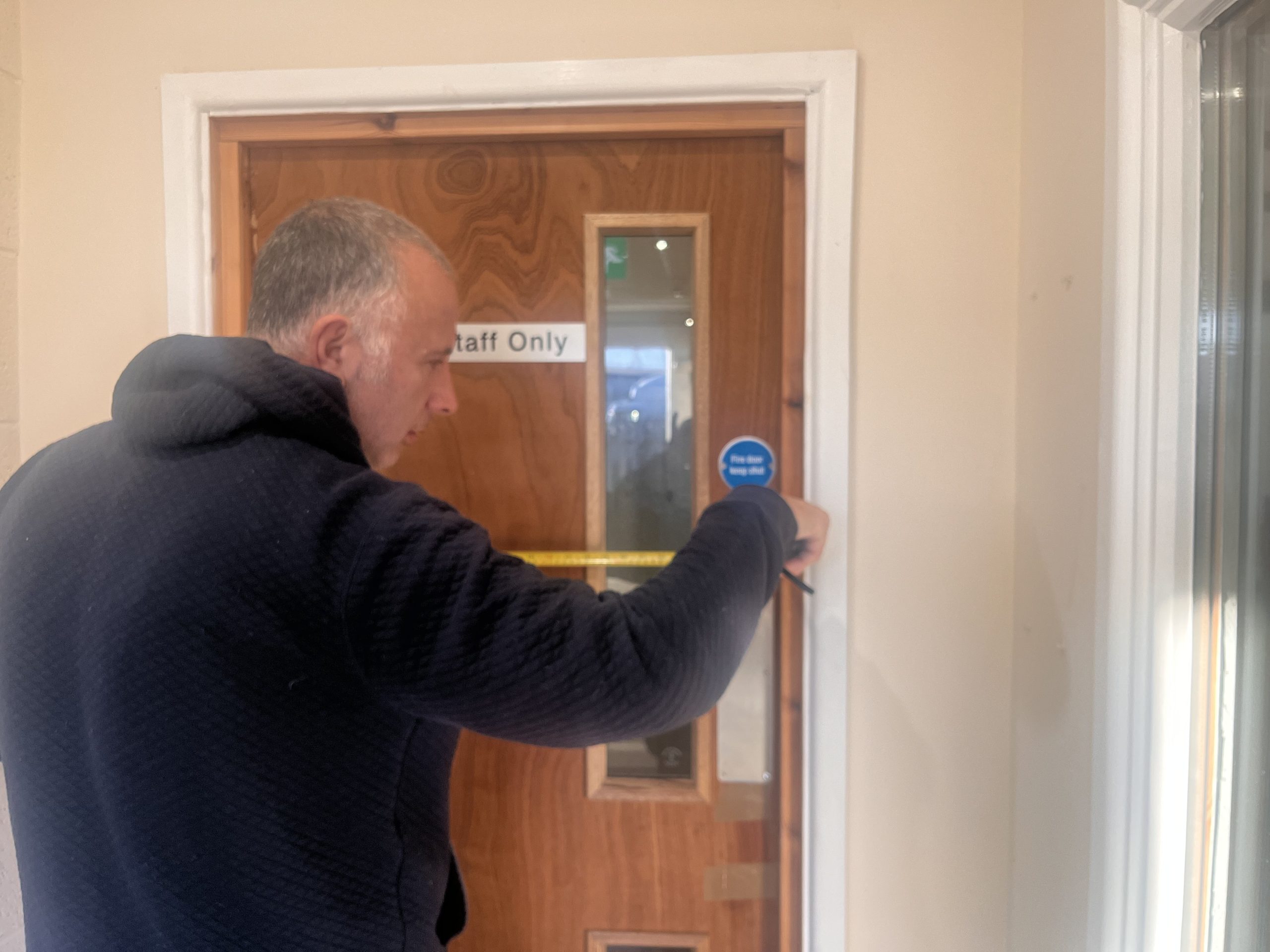
Record damaged doors, missing components and faults reported by residents. Where fire-resisting doors or construction are required, use competent advice to assess their suitability and repairs. Do not choose specifications solely by copying a neighbouring property.
Alarms and lighting
Identify the systems installed and find the relevant inspection and maintenance records. Check whether reported faults remain outstanding. The appropriate system depends on the building; this article is not a design specification.
Everyday management
Agree how residents report defects, who arranges access for repairs and who checks completion. Include cleaners and maintenance contractors in the arrangements where their work affects shared areas or precautions.
Prepare a clear property file
Gather the current licence and conditions, relevant council correspondence, an accurate floor plan if available, and your existing fire risk assessment where applicable.
Keep supporting records together: electrical and gas documentation as relevant, alarm and emergency-lighting records, specialist door reports, maintenance invoices and an action register showing outstanding work.
Check the council’s current application checklist for the actual documents it requires. A neatly organised file helps explain how the property is managed, but paperwork cannot compensate for defective precautions.
Make responsibility for action clear
A managing agent may coordinate inspections and repairs, while the owner authorises expenditure and contractors carry out the work. Put those arrangements in writing so that defects do not sit between different people’s responsibilities.
Where several parties control different parts of the building, establish how they share relevant fire safety information. The person booking an assessment is not necessarily the only person with duties.
As a practical management step, record who owns each action, its priority, the intended completion date and what evidence will confirm completion. Escalate serious safety concerns promptly rather than waiting for routine renewal paperwork.
Review before changes become routine
A loft conversion, an extra letting room, altered kitchen arrangements or changes to occupancy can affect earlier assumptions. Seek appropriate advice before making changes that could alter the escape route or precautions.
Keep any assessment under review and revisit it where there is reason to think it is no longer valid. An unchanged date on a report does not show that today’s property matches the one assessed.
Our guides to assessment review frequency and preparing for an assessment explain the next steps.
Frequently asked questions
Does every Cardiff HMO need identical fire precautions?
No. The layout, use, occupants, shared areas and applicable requirements determine what is appropriate. A single checklist cannot specify a suitable solution for every property.
Will a professional assessment guarantee that a licence is issued?
No. The council determines the licensing application and may consider matters beyond fire safety. An assessment can inform the fire precautions and evidence needed, but it is not council approval.
Can I use the same assessment for several properties?
Each assessment must reflect the particular building and its circumstances. You can use a consistent record system across a portfolio, but findings from one address should not simply be assigned to another.
Can Firebugged assess a Cardiff HMO?
Yes. Discuss the premises and required scope through our Cardiff service page, or read more about our HMO assessment service.
Further guidance
Local guidance and requirements should be checked against your property and current licence conditions. Sources checked: 27 October 2026.
Need a fire risk assessment in Cardiff?
Firebugged provides on-site assessments carried out by Paul Williams, a Level 4 qualified fire risk assessor with more than 26 years of fire safety experience. Tell Paul about your property, its layout and occupancy for a quotation.