If you own, manage or occupy a business premises in Wales, you’ve probably asked yourself this question at some point. The short answer is almost certainly yes — but the full answer depends on what type of premises you have, how it’s used and who occupies it.
This post explains exactly who needs a fire risk assessment in Wales, what the law requires, and what the consequences are if you don’t have one. If you’d rather just speak to someone directly, call Paul on 07966 511750 — he’ll give you a straight answer in a few minutes.
What does the law say?
Fire safety in Wales is governed by the Regulatory Reform (Fire Safety) Order 2005 — commonly known as the Fire Safety Order. This legislation applies to virtually all non-domestic premises in Wales and places a legal duty on the “responsible person” to carry out a suitable and sufficient fire risk assessment.
Since October 2023, following amendments introduced by the Building Safety Act 2022, all responsible persons must have a written fire risk assessment — regardless of how many people work on the premises. Previously, a written record was only required if you employed five or more people. That exemption no longer applies. If you are responsible for any non-domestic premises in Wales, you need a written fire risk assessment.
You must also keep your fire risk assessment under regular review and update it whenever anything significant changes.
Who needs a fire risk assessment in Wales?
The Fire Safety Order applies to almost all non-domestic premises. In practice, this means a fire risk assessment is required if you are responsible for any of the following:
Businesses and workplaces
Any premises used as a workplace requires a fire risk assessment — regardless of size, sector or number of employees. This includes offices, retail units, workshops, factories, restaurants, pubs, salons and any other commercial premises. If you employ people, or if members of the public visit your premises, you need a current fire risk assessment.
HMOs and residential landlords
If you let a house in multiple occupation in Wales, you are required to have a fire risk assessment covering the common areas and shared spaces of the property. In Wales, the Renting Homes (Wales) Act 2022 adds further obligations for landlords around smoke alarms, carbon monoxide alarms, electrical safety and fire doors — making a professional fire risk assessment the most efficient way to demonstrate compliance across all of these requirements at once. See our HMO fire risk assessment page for more detail.
Care homes and residential care facilities
Care homes require a fire risk assessment and are subject to particularly close scrutiny from fire and rescue services due to the vulnerability of their occupants. A suitable and sufficient assessment must specifically address sleeping risk, mobility-restricted residents, evacuation strategies and the competency of staff to carry out those strategies. See our care home fire risk assessment page for more detail.
Hotels, guesthouses and hospitality premises
Any premises with sleeping accommodation that is not a single private dwelling requires a fire risk assessment. Hotels, guesthouses, bed and breakfasts, holiday lets with communal areas and serviced apartments all fall within the scope of the Fire Safety Order. See our hotel fire risk assessment page for more detail.
Warehouses and industrial premises
Warehouses, distribution centres, manufacturing facilities and other industrial premises all require fire risk assessments. Storage density, flammable materials and large open floor plans create specific fire risks that must be properly assessed and managed. See our warehouse fire risk assessment page for more detail.
Offices
Offices of all sizes require a fire risk assessment. Shared buildings, server rooms, high occupancy and the presence of contractors or visitors all contribute to the risk profile of office premises. See our office fire risk assessment page for more detail.
Schools, GP surgeries and public buildings
Educational establishments, healthcare premises, places of worship, community centres, village halls and other buildings used by the public all require fire risk assessments. Public-facing premises are subject to active enforcement by the Welsh fire and rescue services.
Blocks of flats and multi-occupied residential buildings
The Fire Safety Act 2021 confirmed that the Fire Safety Order applies to the structure, external walls and flat entrance doors of multi-occupied residential buildings. This means the responsible person for a block of flats — typically the building owner, freeholder or managing agent — must ensure a fire risk assessment covers the common areas and relevant structural elements of the building.
What if you have fewer than five employees?
As noted above, the requirement to have a written fire risk assessment now applies to all non-domestic premises regardless of how many people you employ. The October 2023 changes removed the previous exemption for smaller businesses. If you were relying on that exemption, your position has changed and you now need a written assessment in place.
Does a fire risk assessment apply to private homes?
No — the Fire Safety Order does not apply to single private dwellings. If you own and occupy your own home and it is not used for any business purpose, you are not legally required to carry out a fire risk assessment.
However, if any part of your home is used for business purposes — for example, if you employ people who work from your home, or if you run a childminding service from your property — the relevant areas may fall within the scope of the Fire Safety Order and you may require an assessment.
Who is the responsible person?
The Fire Safety Order places duties on the “responsible person” — the individual or organisation who has legal control of the premises. In practice this means:
- The employer, where the premises is a workplace
- The owner, where the premises is not a workplace
- The managing agent, facilities manager or building manager, where they have day-to-day control of the premises
- The landlord, for HMOs and common areas of residential buildings
The responsible person cannot pass their legal duty on to someone else. Even if you appoint an external contractor to carry out your fire risk assessment — which is strongly recommended for most premises — the legal responsibility for ensuring that assessment is suitable and sufficient remains with you.
Do you need a qualified assessor, or can you do it yourself?
The Fire Safety Order requires that a fire risk assessment be carried out by a “competent person” — defined as someone with sufficient training, experience and knowledge to carry it out properly. It does not require a specific qualification.
In theory, a responsible person can carry out their own fire risk assessment if they have sufficient knowledge and expertise. In practice, for the vast majority of non-domestic premises in Wales, using a professionally qualified fire risk assessor is the right approach — for several reasons:
- A qualified assessor will identify hazards and risks that are easy to overlook without specialist training
- A professionally produced report provides clear legal evidence of compliance
- For higher-risk premises — care homes, HMOs, hotels, warehouses — a self-assessment is unlikely to meet the standard required by the fire and rescue authority
- Insurance policies increasingly require evidence of a professionally conducted fire risk assessment
- In the event of a fire, a professionally produced assessment provides important protection for the responsible person
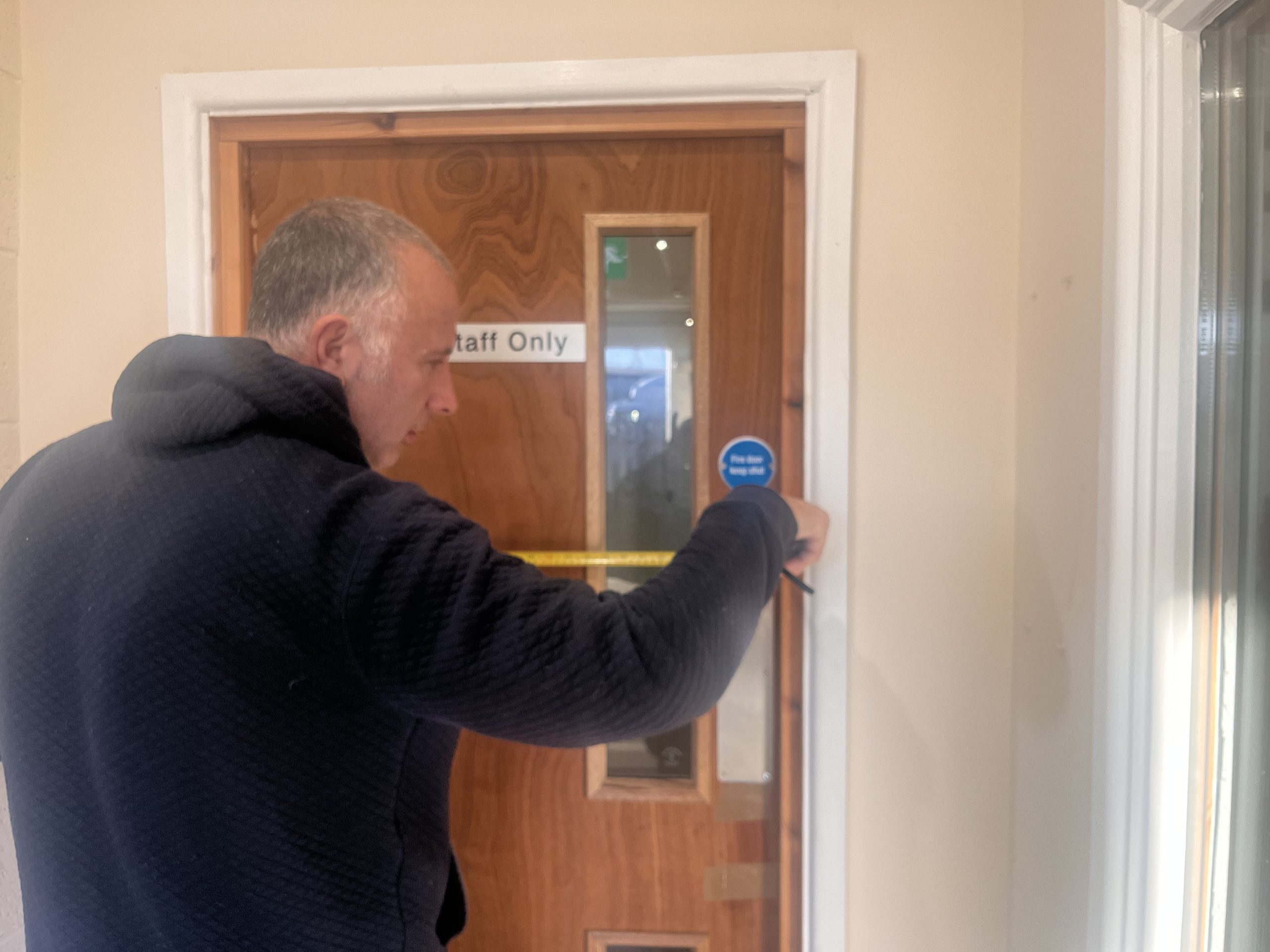
Paul Williams, who carries out all FireBugged assessments, is a Level 4 qualified Fire Risk Assessor — the highest level of qualification available in fire risk assessment practice — with over 26 years of experience across operational fire safety, fire safety auditing and commercial inspections. He has carried out more than 1,800 assessments across South Wales.
What happens if you don’t have a fire risk assessment?
Failing to have a suitable and sufficient fire risk assessment in place is a criminal offence under the Fire Safety Order. South Wales Fire and Rescue Service and the other Welsh fire and rescue services actively inspect premises and enforce the law. The consequences of non-compliance can include:
- An enforcement notice requiring specific fire safety improvements within a set timeframe
- A prohibition notice preventing the use of all or part of your premises until improvements are made — effectively forcing your business to close
- Prosecution, with unlimited fines and — in serious cases — imprisonment
- Invalidation of your insurance cover
- Personal civil liability in the event of a fire causing injury or death
Enforcement activity in Wales has increased in recent years, particularly in relation to HMOs, care homes and hospitality premises. Getting a current, compliant fire risk assessment in place is not something that can be deferred indefinitely.
How often does a fire risk assessment need to be reviewed?
The Fire Safety Order requires the responsible person to keep their fire risk assessment under regular review. For most premises, an annual review is recommended as a minimum. A review should also be carried out immediately following any significant change to the premises — including structural alterations, a change in use, a change in the number of occupants, or a fire or near-miss incident.
For higher-risk premises including care homes, HMOs and hotels, an annual review carried out by a qualified assessor is strongly recommended regardless of whether any changes have occurred.
Need a fire risk assessment in Wales?
FireBugged provides professional fire risk assessments across South Wales for businesses, landlords and public sector organisations of all sizes. Every assessment is carried out personally by Paul Williams — a Level 4 qualified Fire Risk Assessor with over 26 years of experience — so you can be confident the job is done properly.
We cover Cardiff, Swansea, Newport, Bridgend, Barry, the Vale of Glamorgan, Pontypridd, Caerphilly, Merthyr Tydfil, Neath, Llanelli, Rhondda Cynon Taf and all surrounding areas across South Wales.
Call or text 07966 511750 for a no-obligation conversation, or use the button below to request a quote.